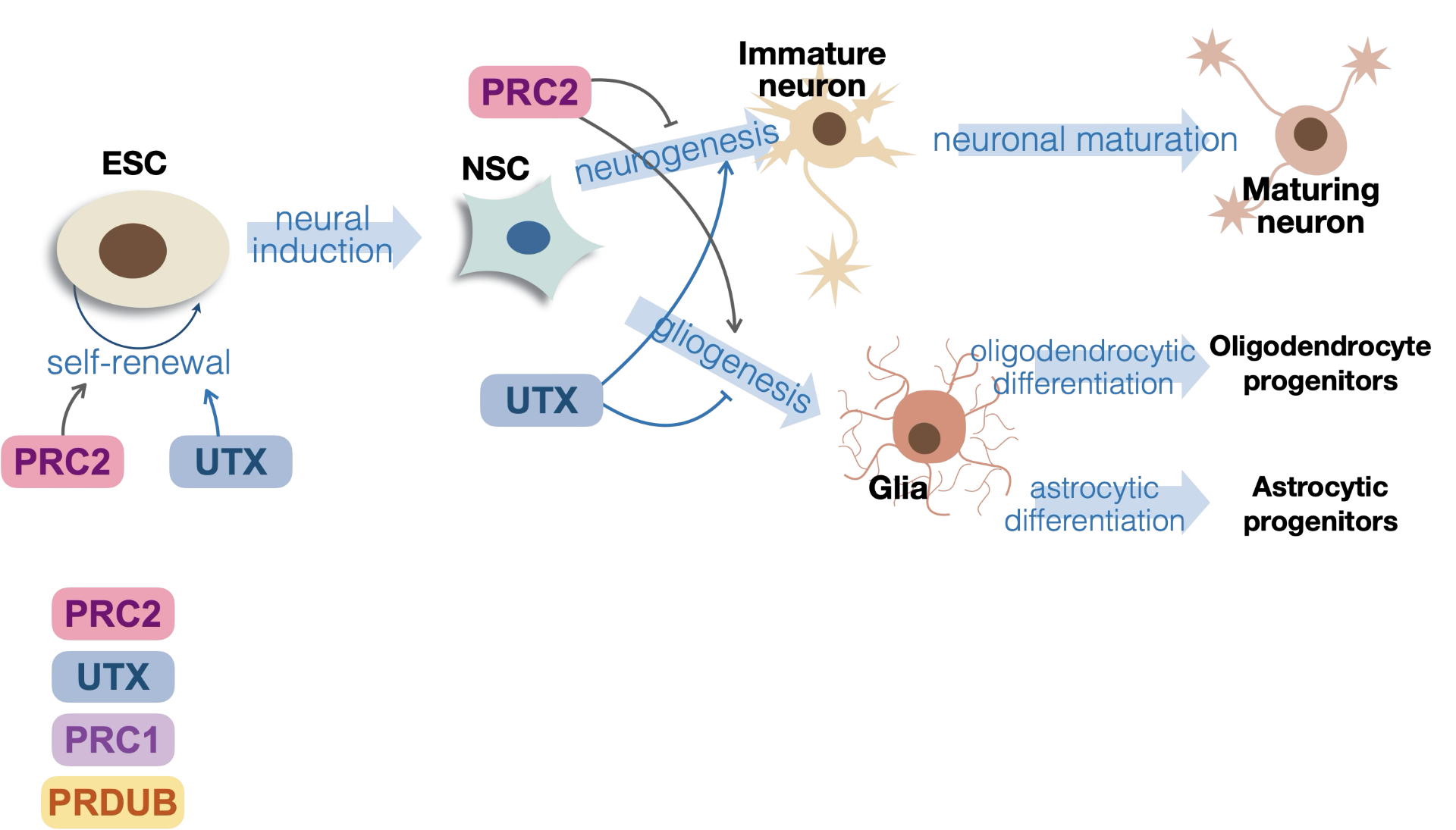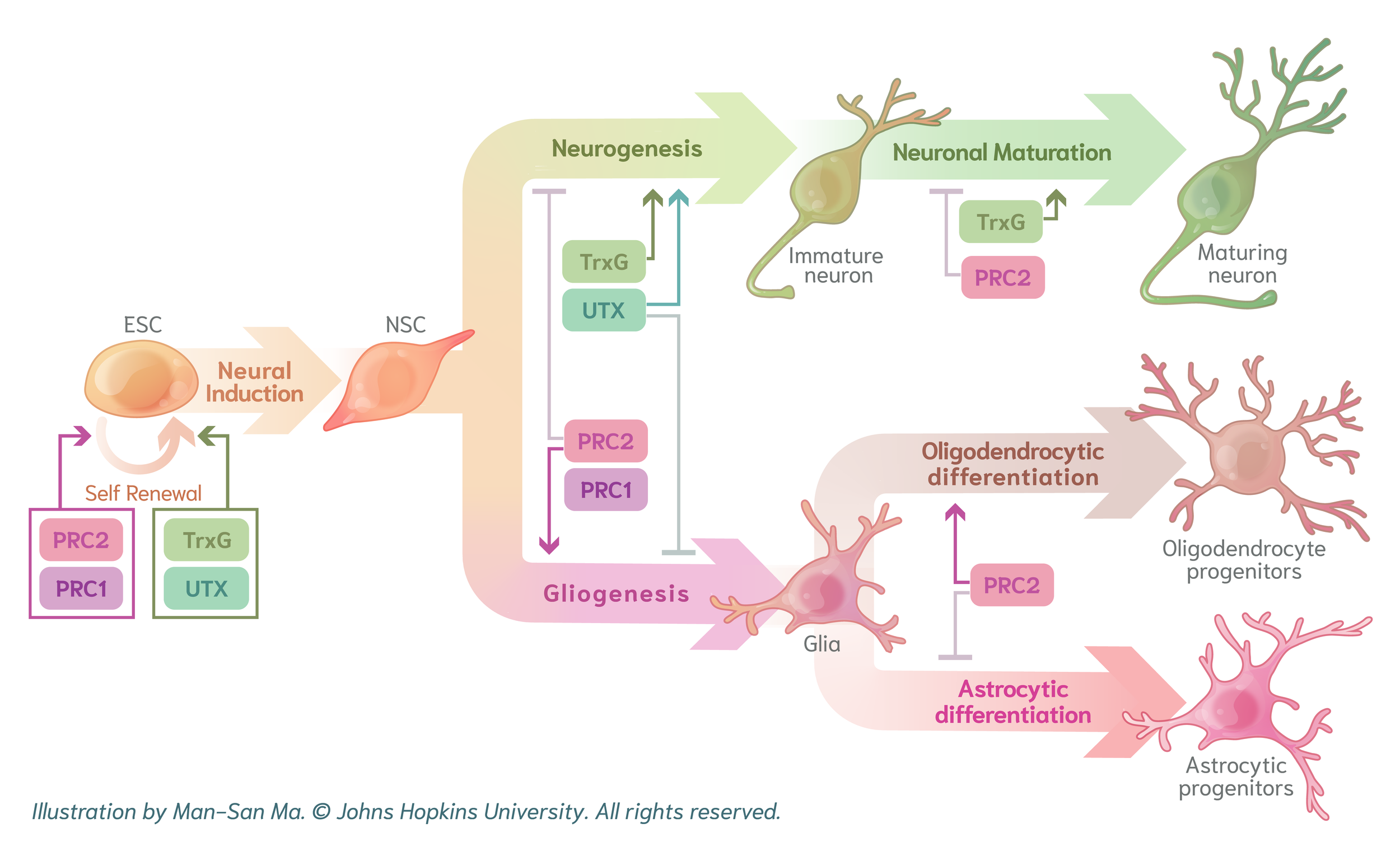
Figure 1. PcG and TrxG proteins control the progression of neurogenesis and gliogenesis.
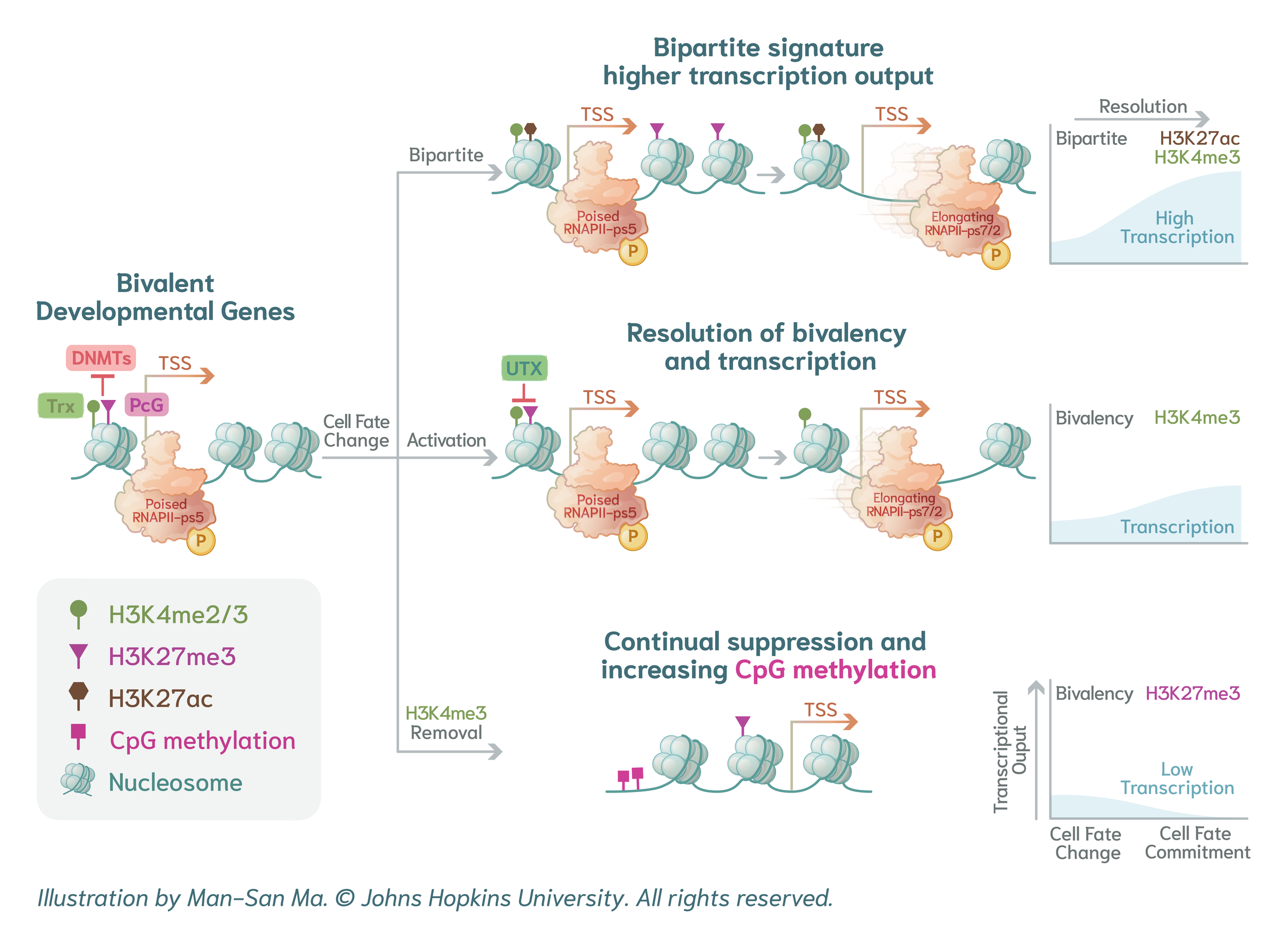
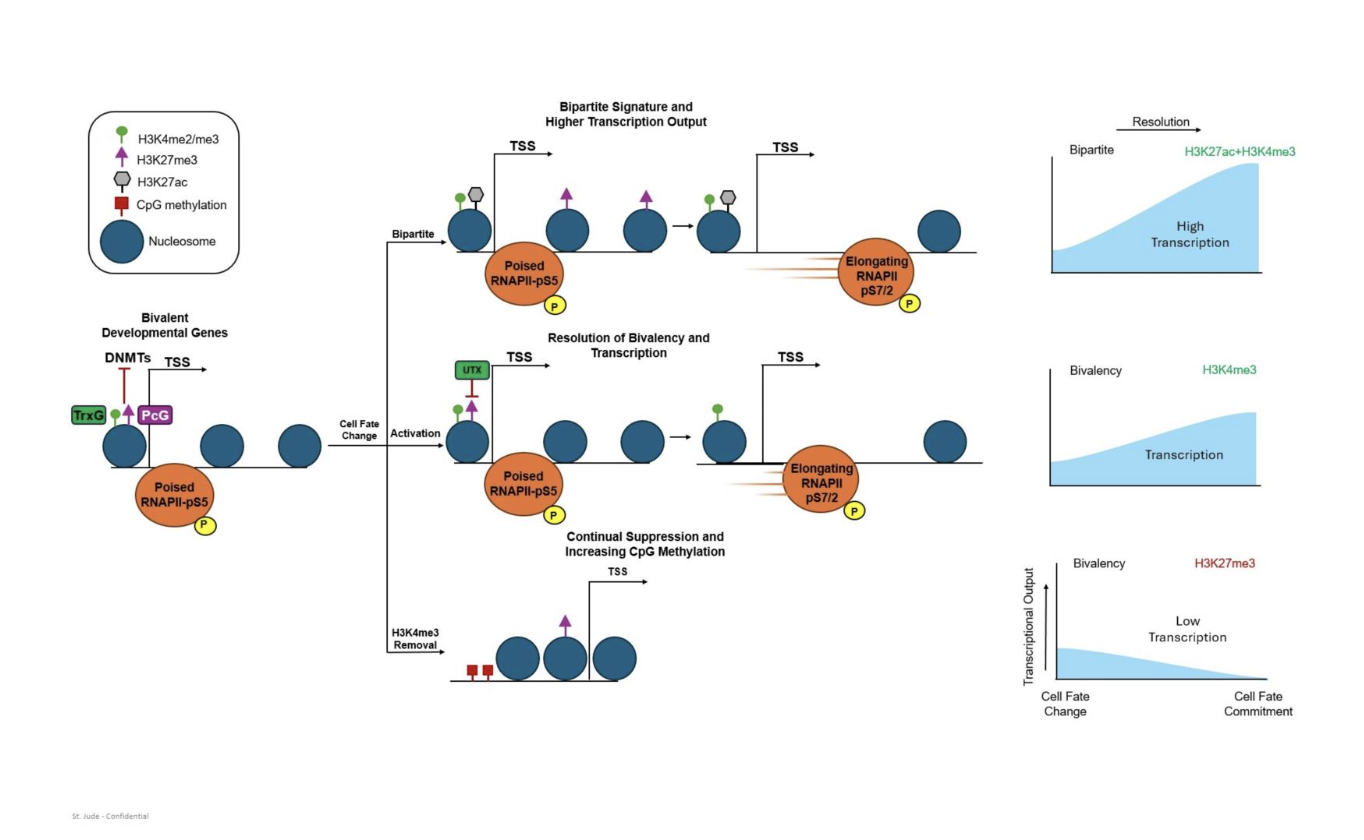
Figure 2. Mechanisms regulating bivalent chromatin during cell fate transitions.
Description
Translated the authors' conceptual sketches into publication-quality scientific illustrations that communicate complex epigenetic mechanisms through clear visual hierarchy, intuitive design, and evidence-based visual storytelling.
Figure 1
This review figure illustrates how Polycomb group (PcG) and Trithorax group (TrxG) protein complexes coordinate neural stem cell fate during development. The illustration maps the dynamic balance between stem cell self-renewal, neurogenesis, neuronal maturation, and gliogenesis, highlighting the opposing regulatory roles of PRC1, PRC2, and TrxG proteins. Designed to simplify a complex molecular pathway into an intuitive visual narrative, the figure helps readers understand how epigenetic regulators influence lineage commitment and central nervous system development.
Figure 2
This conceptual illustration visualizes the molecular mechanisms governing bivalent chromatin during cell fate transitions. It depicts how activating and repressive histone modifications, RNA polymerase II, DNA methylation, and chromatin remodeling proteins interact to regulate whether genes become activated, remain poised, or undergo permanent silencing. The figure was designed to communicate an abstract epigenetic model through a clear, layered visual framework that supports both educational understanding and scientific communication.
Intended Audience
Researchers, clinicians, and graduate-level learners in neuroscience, developmental biology, and epigenetics
Published in: Trends Neurosciences, "From chromatin dynamics to brain disease: Polycomb-Trithorax mechanisms in neurodevelopment.”
Medium
Adobe Illustrator
Process Work
Client Sketches
Dr. Peng provided exceptionally clear and well-organized conceptual sketches, which streamlined the illustration process and enabled an efficient translation of her scientific vision into publication-quality figures. The strong foundation established during the planning phase minimized ambiguity, allowing the illustrations to be completed within three days with only minor revisions. This project highlights the value of close collaboration and clear scientific direction in producing accurate, high-quality visual communications on an accelerated timeline.